
Fraud prevention (CN/HK)
Fraud and disputes usually happen when there is pressure, weak reconciliation, and missing evidence. This checklist helps CN/HK suppliers reduce risk without harming honest payers, by confirming status inside ByteMax and keeping minimal, relevant records.
Checks before you deliver
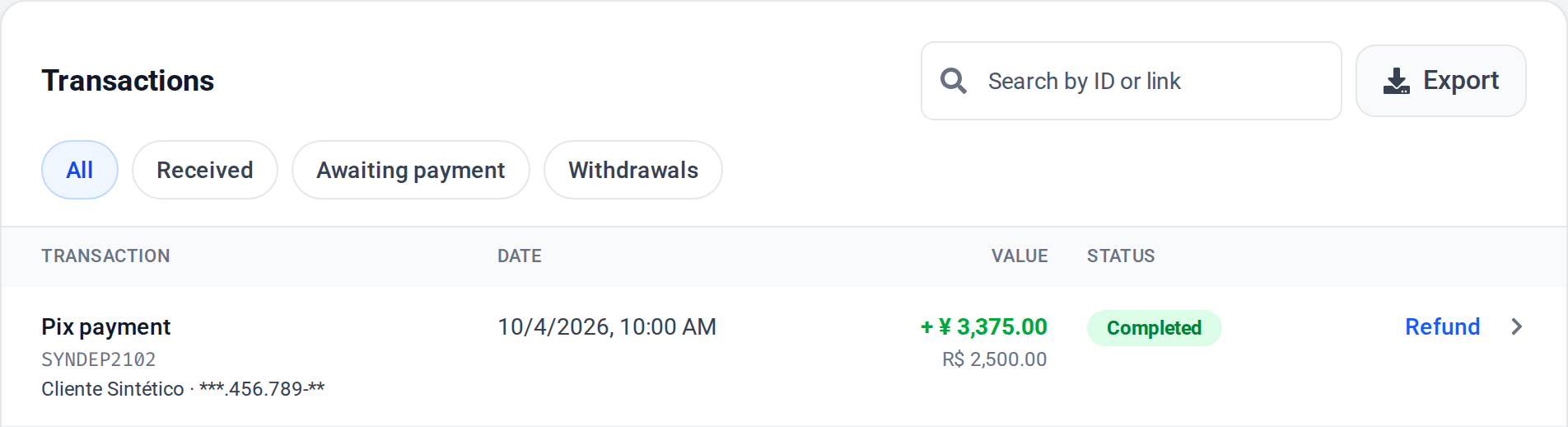
- Confirm the order status inside ByteMax (Wallet/order), not only bank receipts.
- Keep a clear internal ID (e.g., ORDER-1042) and store the conversation/invoice.
- When available, compare the payer name and document (CPF/CNPJ) shown in transaction details.
- Verify the payer contact matches what was agreed (email/WhatsApp/WeChat) before delivery.
- Avoid third-party deliveries without written confirmation.
- For physical delivery, keep tracking/AWB and proof of posting/delivery.
- For international shipping, confirm the delivery address/recipient carefully and be cautious with last-minute redirects/changes.
Risk signals (examples)
- Excessive urgency to deliver before ByteMax shows Completed.
- Changing value or recipient details after payment.
- Request to deliver to a third party or a different address without evidence.
- Payer refuses to confirm basic info or gives inconsistent answers.
- Multiple split payments without a clear reason.
- Dispute threats even after delivery proof is shared.
Operational controls
Keep simple rules and always document acceptance. This reduces disputes and holds.
- Refund/cancellation policy (when possible and typical timeframes, as shown in the UI).
- Delivery deadline and method (include time zones for CN/HK ↔ BR).
- What counts as delivered (tracking delivered, confirmation, logs).
- Official communication channels (for example, WeChat + email) and where the agreement happens.
- How you identify each order (internal ID) and where you store evidence.
- For CN/HK ↔ BR operations, also keep shipping method, tracking and posting proof from day one.
Pix disputes and fraud returns (context)
Pix is the instant payment system in Brazil. CPF/CNPJ are Brazilian tax IDs and, in this context, refer to the payer in Brazil. Use them only for checks and reconciliation.
- If the payer uses CPF as a Pix key, ask for digits only and compare it with the payer name.
- If payer name or document does not match what was agreed, pause delivery and contact support.
- Always save the Payment ID and the Wallet or order status as proof, not only bank screenshots.
- Avoid storing CPF/CNPJ in insecure places; keep only what is necessary and restrict access.
- For high-value orders, keep clear proof of shipping and delivery (tracking, photos, and conversations).
LGPD: handling personal data safely
Minimize what you collect and keep. Store evidence securely and share only what is relevant.
- Collect only what is necessary for proof and reconciliation.
- Restrict access to screenshots and exports (principle of least privilege).
- Do not share sensitive documents in public channels; avoid sending IDs when not required.
- When sending evidence, crop and hide full addresses and unrelated IDs.
- Define internal retention periods and delete old evidence when it is no longer needed.
If you suspect fraud
- Pause delivery/execution and document what was agreed.
- Gather evidence (chat, invoice, tracking) and write a timeline (UTC + BRT).
- If needed, open or respond to a dispute quickly with minimal, clear files.
- Contact ByteMax support with the Order/Payment ID, amount, and what happened (short summary).
- After resolving, update your process (policy, checklist, evidence) to avoid repetition.
Need help? Contact ByteMax support
If something differs from what you see on screen, follow what the screen shows and send these details to speed things up.
- Payment/Order ID (e.g., PAGAMENTO-000123 or ORDEM-000123).
- Approximate date & time (include timezone: UTC or BRT (UTC-3)).
- Amount, currency (BRL/CNY) and the status shown.
- Screenshots without unnecessary sensitive data (keep the ID visible).
- If there's a dispute: 1 or 2 chat screenshots showing the agreement and the relevant receipts.